
Emergency Garage Door Repair Near Me: What Plymouth Homeowners Should Do First
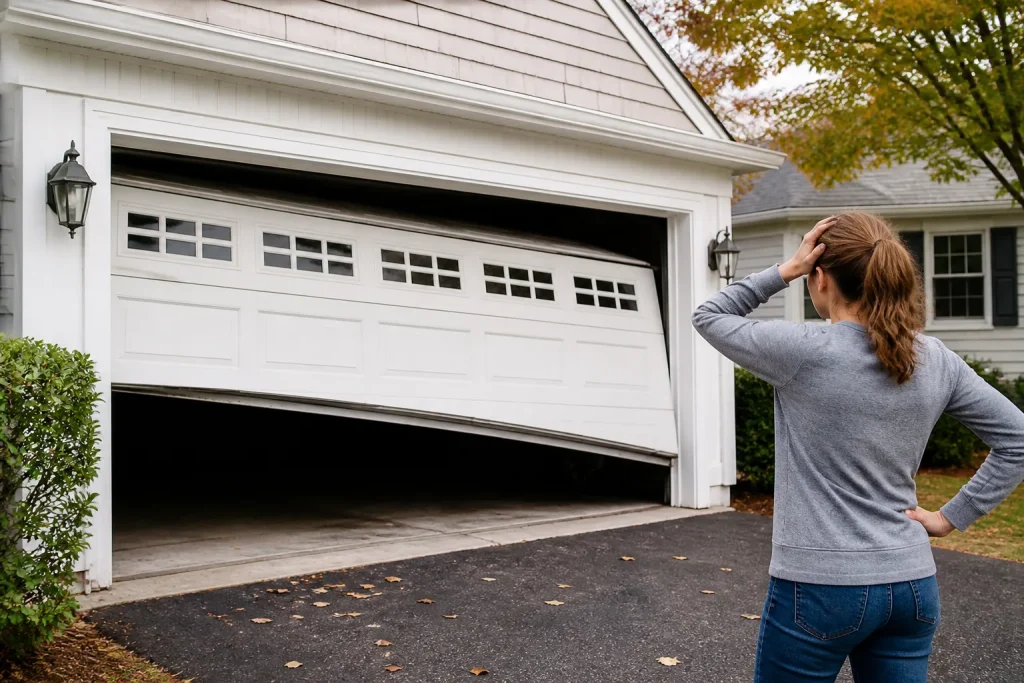
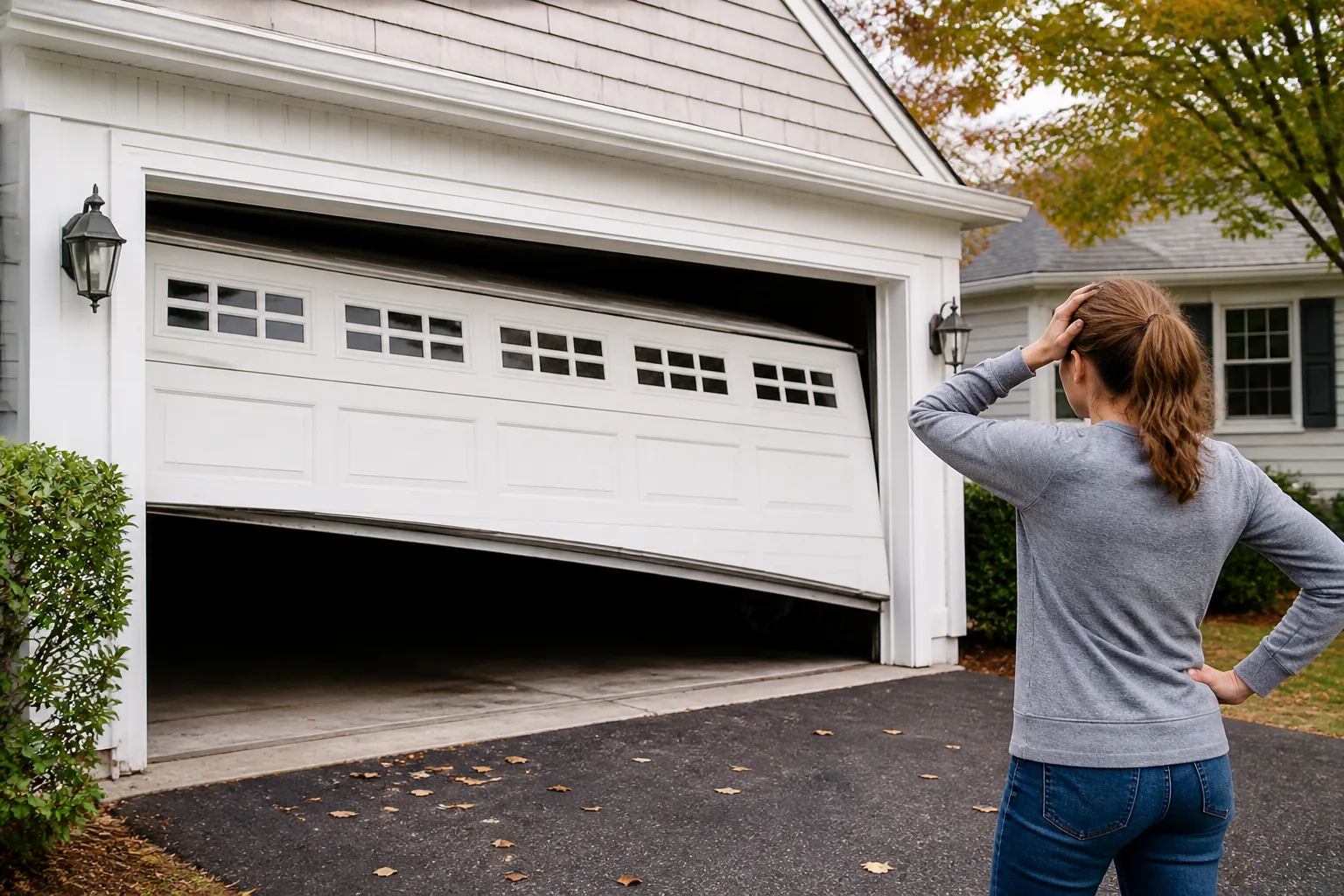
Most garage door injuries happen after the door fails, not during it. That’s the part people don’t expect. The panel comes off the track or the spring lets go with a bang, and then instinct takes over: grab the bottom section, haul it up, get the car out. But a door with a broken torsion spring is a door under stored tension you can’t see, and forcing it is how a simple cable repair turns into bent panels, a cracked bottom section, and a much larger bill. In Plymouth, the first fifteen minutes matter more than the next fifteen hours. Here’s exactly what to do.
If you’d rather not touch it at all, call (866) 937-7208. We answer 24/7, with fast dispatch from 7am to 7pm, Sunday through Friday. The estimate is free.
Key Takeaways
- Stop pulling on the door the moment something fails.
- Identify the failed component before you call so dispatch can match the right technician.
- If a torsion spring is broken, do not touch the door and do not release anything.
- Secure a half-open door with supports, not with your hands.
- Call rather than text for anything that leaves the house unsecured or traps a vehicle.
First, stop: what not to do in the first 15 minutes
Don’t force the door. A garage door balances on its springs, and the opener moves it only because the springs carry the weight. When a spring or cable breaks, that balance disappears and the full weight of the door shifts onto whatever is holding it. Pulling on the bottom section at that point puts the load on the tracks and panels instead, which is how a door that would have needed one part needs several.
Don’t cycle the opener to “see if it’ll work now.” If a spring is broken or a cable is slack, the opener will try to lift a door it physically can’t, and the force lands on the opener’s gear and rail. You can burn out a perfectly good opener in a matter of seconds. Unplug it or flip the wall switch off so nobody in the house happens to press the remote.
Don’t stand under a door that’s only partway down. A door hanging open on one side is a door waiting to drop. Keep people, kids and pets clear of the opening until it’s supported or the technician arrives.
What you can safely do: note the sound it made, take a photo of the door in its current position, and get the car out through another route if you can. In our experience, the homeowners who end up with the smallest repair are the ones who stopped touching things and called.
Identify what actually failed so you can describe it accurately
“It won’t open” gives a dispatcher almost nothing to work with. “The door came down crooked and there’s a snapped spring above the door on the left side” tells us exactly which parts to bring and how much time to schedule. You can spot most failures from the floor without touching anything.
- Broken torsion spring. Look at the horizontal shaft above the door and the springs coiled around it. A clean gap in the coil, or two separate coils where there used to be one, means the spring has snapped. You’ll usually hear a loud bang when it happens, and the door won’t lift or won’t stay up.
- Broken extension spring. If your springs run along the tracks at the sides, look for a stretched-out spring hanging loose or a snapped cable.
- Frayed or snapped cable. Check the cables running down each side by the rollers. A cable that’s come off its drum usually leaves the door hanging crooked, one side lower than the other. Never try to re-seat a cable yourself; they’re under tension too.
- Off-track door. If one roller has popped out of the track, the door will bind and stop, often partway down. Note which side and which corner.
- Opener problem. If the door is balanced and moves by hand but the opener won’t run, or the motor hums without moving anything, the fault is in the opener, the gear, the logic board, or the safety sensors near the floor.
If the door moves smoothly by hand but the opener is dead, it’s an opener issue. If the door won’t move by hand either, the problem is in the door’s mechanical parts. That distinction alone saves a lot of back-and-forth.
The one manual release step that’s safe, and the two you must not touch
If the door is closed and the opener simply won’t run, pulling the red emergency release handle (the one hanging from the opener trolley) disconnects the door from the opener so you can lift it by hand. That’s safe only if the door is fully down and the springs and cables are intact. Before you pull it, test the balance gently: lift the door a few inches by hand. If it feels impossibly heavy or won’t stay put, stop and leave the release alone.
Two things you never touch after a failure:
- The torsion spring and its shaft. A wound torsion spring stores enough energy to cause serious injury in an instant. Do not try to unwind it, cut it, or loosen the set screws on the drums.
- The cables and their drums. Cables carry the same tension. A slack cable can snap back hard. Keep your hands off them.
Spring work is a trained job for a reason, and it’s a named specialty on our garage door spring repair service because so few people should be doing it. Our technicians have up to 15 years of experience with these mechanisms, and even they treat a broken spring with respect. If you’re not sure which spring type you have, that’s a good sign it’s time to call.
Why Plymouth’s wet winters make spring failures more likely after a cold snap
Metal fatigues faster when it cycles between damp and cold, and Plymouth’s winters give it plenty of both. Humid stretches of the year let a fine film of moisture sit on the springs and cables, and the constant temperature swings of a New England winter work the steel back and forth. When a hard cold snap arrives, that already-stressed steel contracts and gets brittle, and a spring that’s been quietly weakening for months picks that morning to break. That’s why so many spring failures happen on the coldest mornings of the year, usually right as someone is leaving for work.
What that means for you: if you’ve noticed a door that’s been running louder, lifting a little slower, or creeping down on its own, don’t wait for the bang. A worn spring gets replaced on a scheduled visit instead of an emergency one. And give your door a quick once-over each fall, looking at both springs for gaps and the cables for fraying.
What “same-day” actually means, and how to get dispatch moving
Calling gets you a person faster than texting when something is genuinely urgent. A call lets us ask the right questions on the spot: what broke, which side, is the door open or closed, is a car trapped, and is the house exposed. Text is fine for photos or for a non-urgent question, but for a door that’s stuck open, hit the phone. We answer 24/7. A call outside dispatch hours is booked into the next opening, Sunday through Friday, 7am to 7pm.
Four details speed up dispatch more than anything else:
- Your address and which way the door faces (front, side, detached garage).
- What failed, using the component names above.
- Whether the door is fully open, fully closed, or stuck partway.
- Whether a vehicle is trapped inside the garage.
Knowing the brand helps too. Plymouth doors and openers commonly turn up as Amarr, Wayne Dalton, Craftsman or Raynor, among others, and we’re familiar with all of them, so the technician arrives already knowing the hardware. That’s part of what makes garage door repair go faster on a first visit. If it turns out the opener rather than the door is at fault, garage door opener repair covers that side of the job too.
How to safely secure a door that’s stuck halfway down
A door stuck partway open is the most awkward situation to leave overnight, and the temptation is to shove it down by hand. Don’t. If the door is hanging at an angle on a failed spring or cable, pushing it can bring it down hard or twist the panels further. The safer approach is to brace it where it is.
Slide something solid under each side of the door’s bottom edge to stop it dropping further, if you can do so without getting under the door. A pair of sturdy sawhorses, stacked blocks, or a length of timber wedged underneath will hold the door in its current position so nothing shifts while you wait. Then keep the area clear, keep the opener switched off, and don’t let anyone walk or park under the door.
If the door is fully closed but unsecured, lock it manually or block it from the inside. That’s a secured house until the technician arrives, and the security worry is off the table. If sealing the opening overnight is really not possible, that’s exactly the situation Plymouth Garage Door Repair Co treats as urgent, so say so when you call and we’ll prioritize it.
Related services in Plymouth
When you’re ready to sort the whole door rather than just the failure, our garage door repair team handles springs, cables, tracks and panels, and we install new doors when the repair no longer makes sense. If it turns out to be an opener issue, our garage door opener repair covers it. And when a door has done its time, replacement is a conversation worth having.
The Bottom Line
In the first fifteen minutes, the goal is simple: stop the damage from spreading. Don’t force the door, kill power to the opener, keep clear of anything under tension, and note exactly what failed so dispatch can send the right help. From there, a trained specialist takes over. Identifying the component before you call is the single biggest thing you can do to keep a small fix from becoming a big one.
If you’re in Plymouth and need help, Plymouth Garage Door Repair Co offers free estimates. Call (866) 937-7208. We answer 24/7, with fast dispatch from 7am to 7pm, Sunday through Friday, and the price is quoted and agreed before any work starts. Our technicians have up to 15 years of experience, and we work on all the major brands, so the person who shows up knows your door.
Frequently Asked Questions
The price is set per job by the written estimate, and we don’t publish a flat figure because a snapped cable, a broken spring and an off-track panel are different jobs. What we can promise is that the price is quoted and agreed before any work starts, so there are no surprises once the technician is on site. Call (866) 937-7208 for an exact quote. Estimates are free.
Same-day service is available for urgent failures, and we answer the phone 24/7. A call outside dispatch hours is booked into the next opening, Sunday through Friday, 7am to 7pm. The sooner you call with the failed component identified, the faster dispatch can schedule it. Call (866) 937-7208 to get on the schedule.
No. The written estimate is the price. If the technician finds something different once the door is inspected, you’ll hear about it and agree to it before any extra work begins, so you’re never handed an invoice bigger than the quote. Call (866) 937-7208 for a free estimate.
Yes. The local professionals we connect you with are licensed and insured as their state requires. Our technicians have up to 15 years of experience, and spring work is a specialty we take seriously. Call (866) 937-7208 with any questions before you book.
Written by the team at Plymouth Garage Door Repair Co.
Need Garage Door Help?
Call Plymouth Garage Door Repair Co - the local pro we connect you with is licensed and insured, here with fast help in Plymouth.
(866) 937-7208