
Last updated November 22, 2026
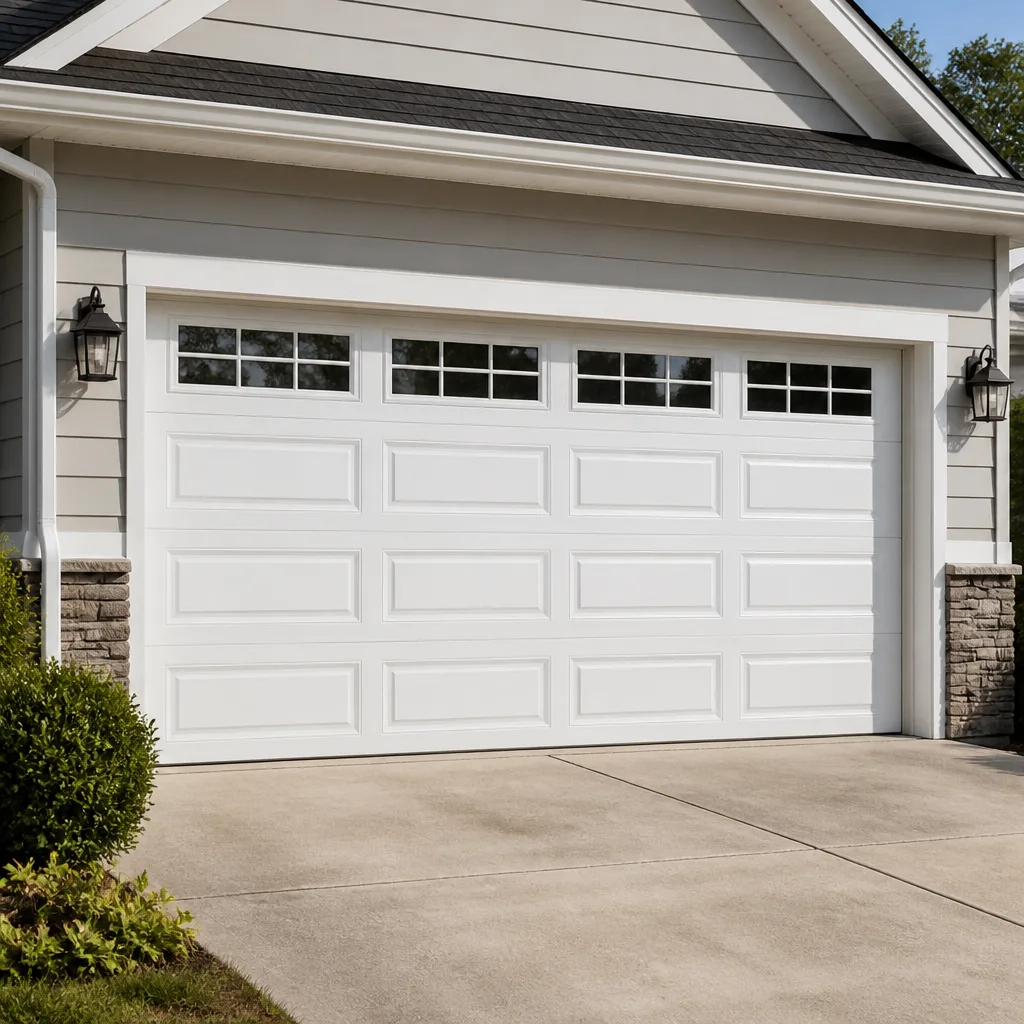 Raised-panel steel
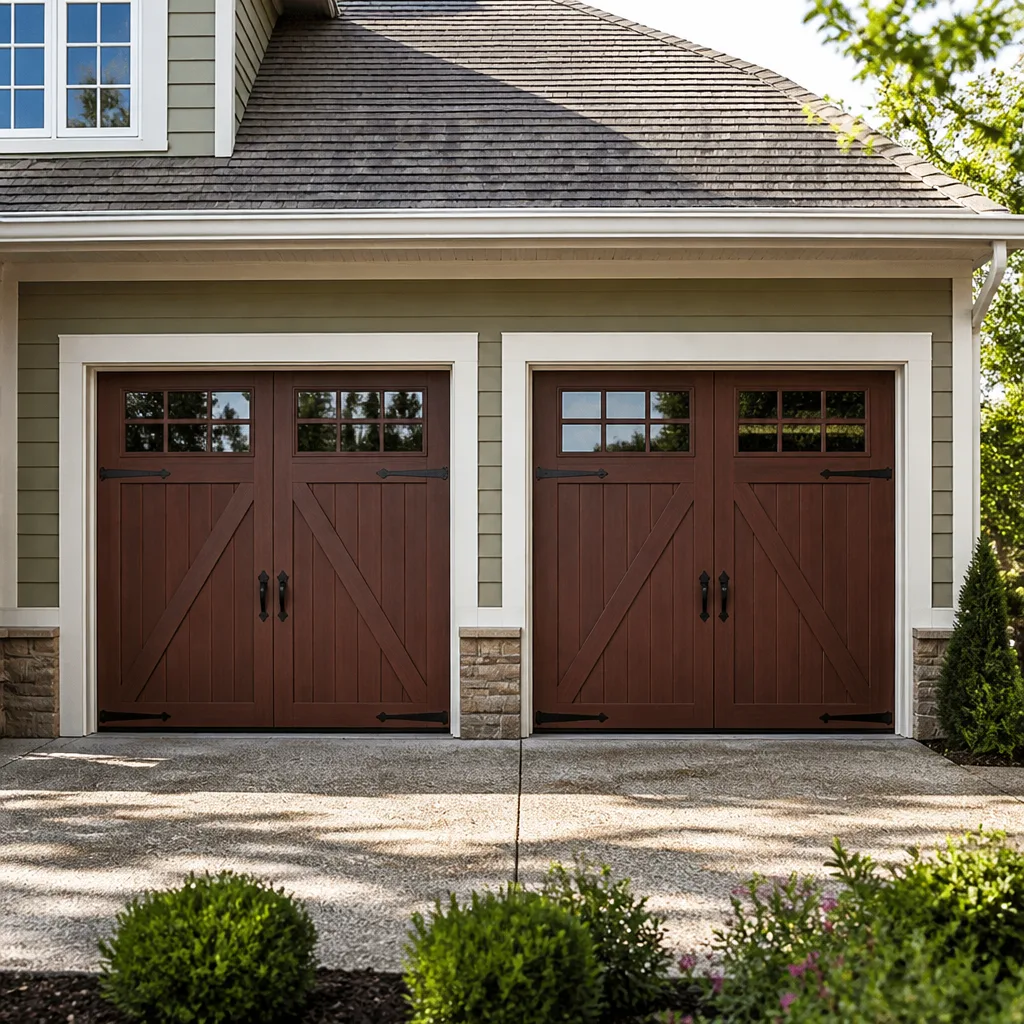 Carriage house
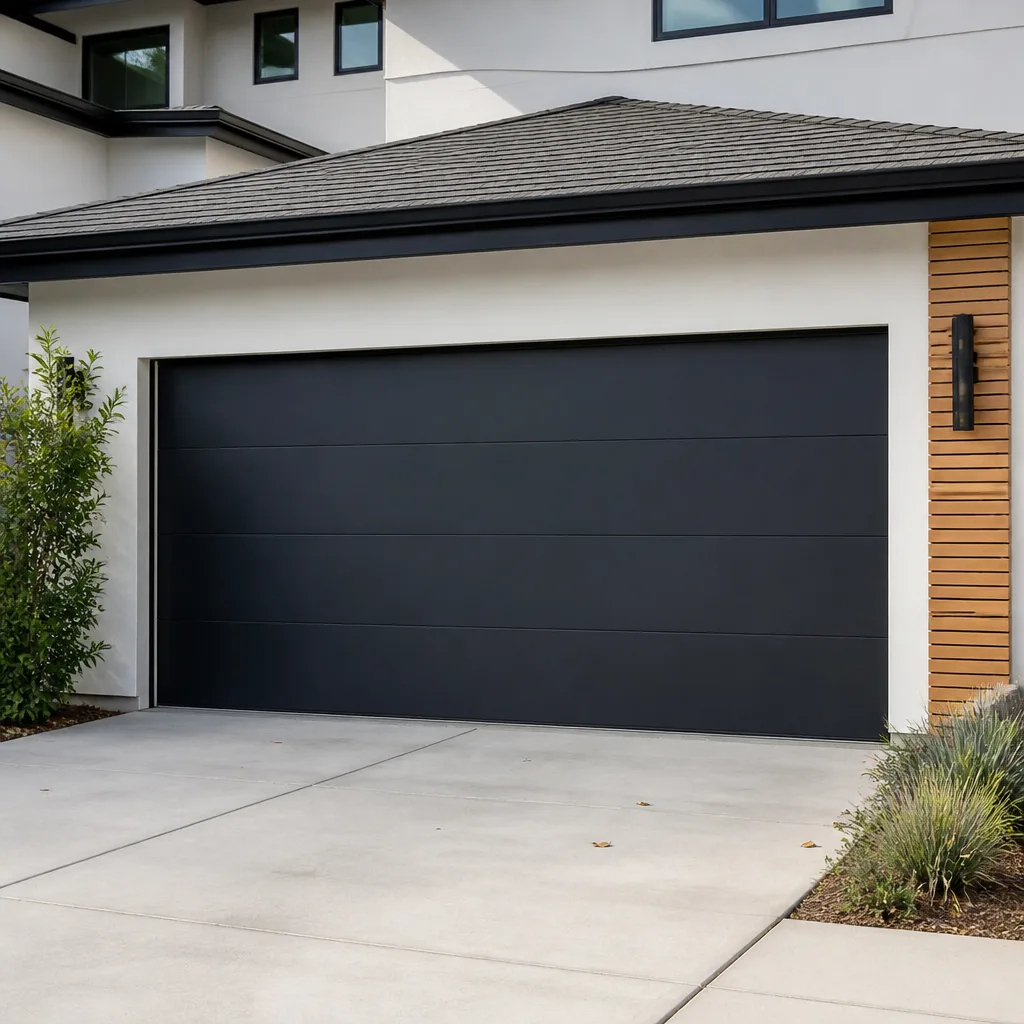 Modern flush
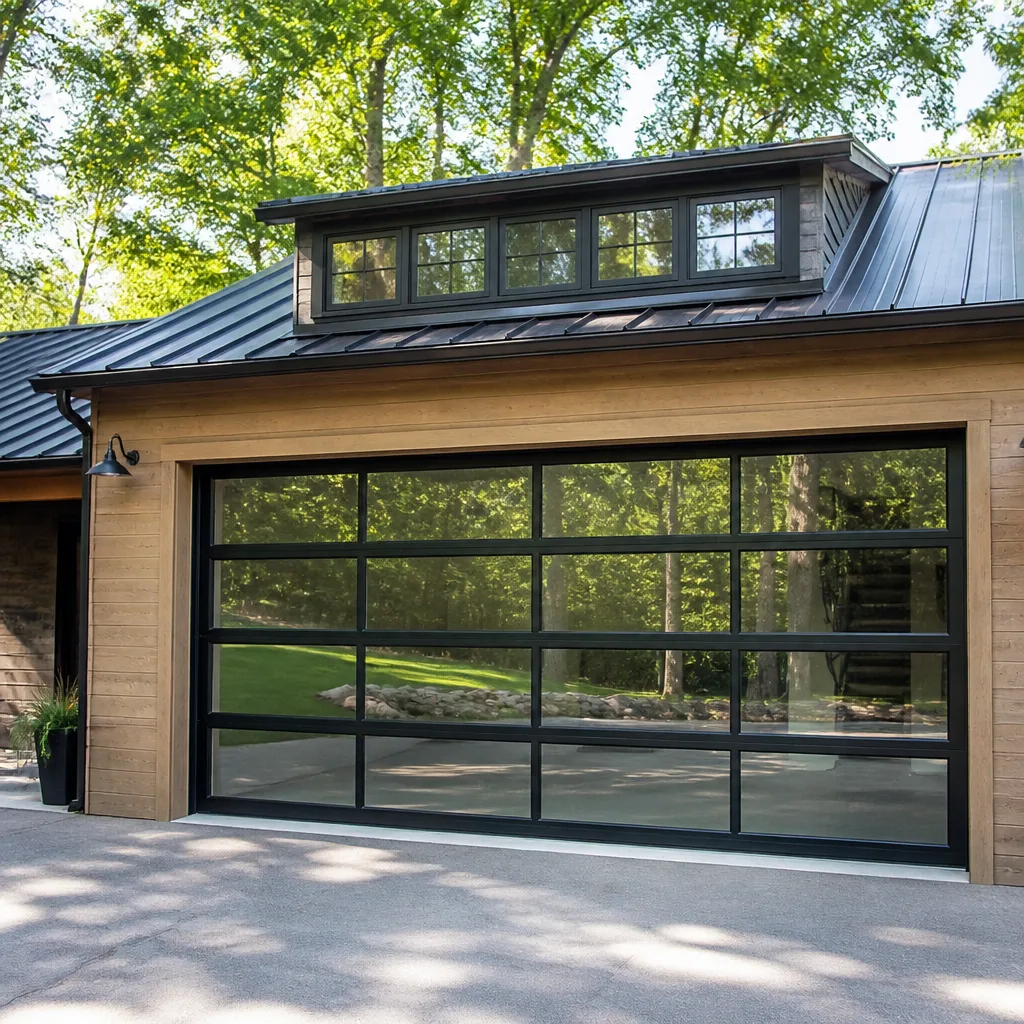 Full-view glass
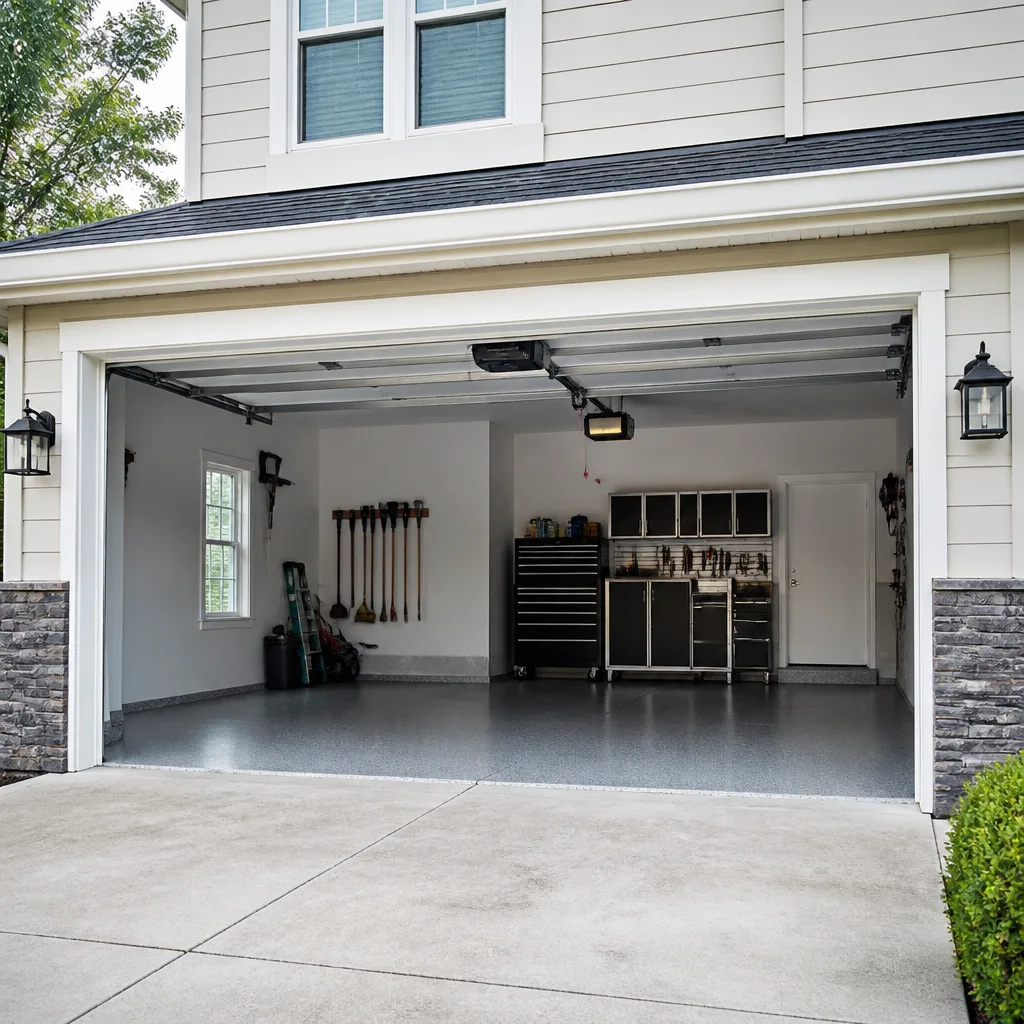 LiftMaster openers
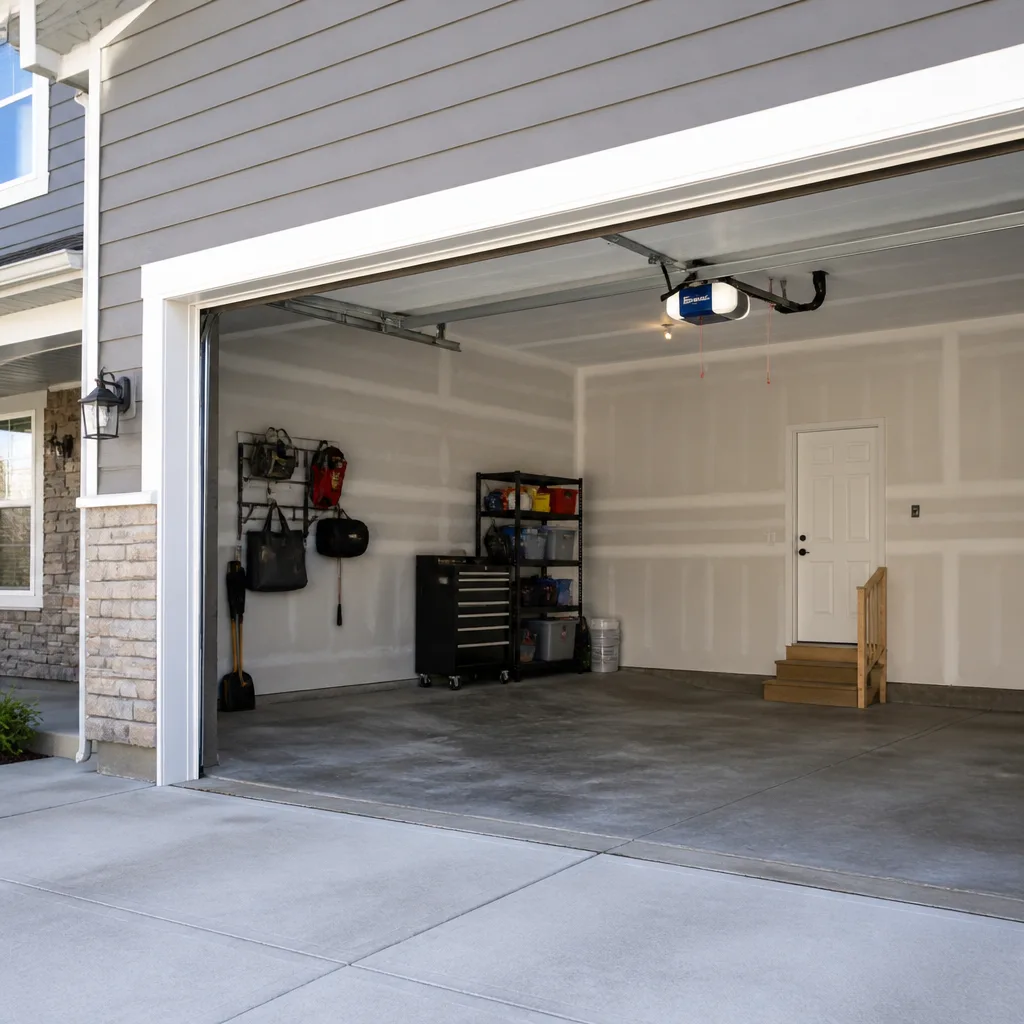 Chamberlain openers
Full 25-point door and opener safety check with every visit - springs, cables, rollers, tracks, and your LiftMaster or Chamberlain opener included
You get a price before we start. It does not change when the pro arrives.
Get your free estimateThe Complete Guide to Garage Doors in Plymouth
Most garage door guides are written for a suburb in Arizona. Plymouth is not that. Here, a door works against salt-laden air off Cape Cod Bay, a freeze-thaw cycle that moves the ground under your slab, and housing stock that in some neighborhoods predates the Second World War. That combination corrodes hardware on a timetable that surprises people who moved here from inland, and it racks frames in ways a showroom floor never shows you. This guide covers every major repair and installation scenario a Plymouth homeowner is likely to face, which door materials actually hold up here, and how to tell a panel swap from a full replacement before you spend a cent. If your door is failing today, that’s what the garage door repair service is for. If you want to understand the whole picture first, keep reading.
Quick Answer
A garage door in Plymouth needs more attention than the same door in a dry climate because salt air and freeze-thaw cycles wear springs, cables and bottom brackets faster, and older homes in and around the historic districts often have non-standard rough openings that complicate replacement. The right approach is to have a specialist inspect the full system, not just the part that broke, and to choose door materials rated for a damp coastal climate rather than whatever looks best in a catalog. Most everyday repairs are quick and can often be handled same-day; new doors are measured, ordered and scheduled.
Styles & brands we work with
- Raised-panel steel
- Carriage house
- Modern flush
- Full-view glass
- LiftMaster openers
- Chamberlain openers
Table of Contents
- Why Plymouth Doors Age Differently
- Springs, Cables and Bottom Brackets in a Coastal Climate
- Older Plymouth Homes and Non-Standard Rough Openings
- Which Door Materials Hold Up Here
- Panel Swap or Full Replacement?
- Openers: Smart vs. Legacy Units
- Realistic Timelines for Every Major Job
- What Garage Door Work Typically Costs in Plymouth
Why Plymouth Doors Age Differently
Your garage door is the largest moving object on your house, and in Plymouth it’s also one of the most exposed. A door facing the water takes a constant bath of airborne salt, which doesn’t just sit on the paint. It gets into the gaps around hinges, rollers and the bottom bracket and starts working on bare steel. Add the freeze-thaw cycle and you get two forces pulling in opposite directions: salt pushing corrosion inward, frost pushing the ground and the frame around.
What that means in practice is that a spring or cable that a manufacturer rates for a certain number of cycles may not reach it here. Corrosion weakens a cable strand from the inside out, so the first sign is usually a single frayed wire you spot during a routine look, not a dramatic snap. Bottom brackets and the metal at the base of the door are closest to the wet ground and the road spray, so they go first.
We’ve seen this pattern repeat across Plymouth, from Manomet to the neighborhoods near the waterfront and back toward the older streets in the center of town. It’s not a sign of a bad door. It’s a sign of a specific environment, and it argues for checking hardware more often than a manufacturer’s generic schedule suggests.
A few conditions to watch for:
- Rust bleeding from hinge joints or the bottom bracket, even in small amounts
- A cable that looks fuzzy where it wraps the drum
- Panel bottoms showing paint blistering or soft metal near the ground line
- A door that binds or rubs at one side after a hard winter
- Weather seal that’s hardened, cracked or pulling away from the frame
None of those are emergencies on their own, but each one points to something a specialist should see before it turns into a snapped cable or a door that won’t close. Regular inspection is the cheapest insurance you have.
Springs, Cables and Bottom Brackets in a Coastal Climate
Springs and cables carry the full weight of the door. They are also the most dangerous components to touch, and a coastal climate gives them less margin than a dry one. If you take one thing from this guide, make it this: spring and cable work is not a homeowner job, no matter how straightforward a video makes it look. A torsion spring under tension stores enough energy to cause serious injury in an instant, and a bottom bracket under load can release violently if the wrong bolt moves.
What you should do is check. Here’s the safe inspection routine:
- With the door closed and the opener disconnected, look at each spring for a visible gap or a coil that’s separated from the rest.
- Check the cables at both sides for fraying, kinks or slack that shouldn’t be there.
- Inspect the bottom bracket and the base of the door for rust that has eaten into the metal.
- Listen for a pop or snap when the door moves, and watch whether it rises evenly or sags on one side.
- If anything looks wrong, stop using the door and call a specialist.
What you should not do is loosen a bracket, unwind a spring, or attempt to replace a cable yourself. Those are the jobs that send people to the emergency room. For a failed spring, our garage door spring repair service is exactly the scenario to call about. When one spring in a matched pair goes, both usually need to be replaced together, since the surviving one has taken the same wear and will likely fail next. A pair costs roughly twice a single spring for that reason.
Older Plymouth Homes and Non-Standard Rough Openings
Plymouth has a large share of homes built before 1990, and the older streets and historic districts carry plenty of construction that predates modern building conventions. That matters when it’s time to replace a door, because a garage’s rough opening, the framed hole the door fits into, wasn’t always sized to today’s standard dimensions. A door that measures fine on paper can still sit awkwardly because the header is a touch low, the opening is slightly narrow, or the framing has settled out of square over the decades.
This is where a door that “looks like the same size” as your neighbor’s can end up needing custom panels or a trim-and-reframe before it hangs properly. A specialist measures the rough opening, not just the existing door, and checks whether the opening is square and the floor is level. Frost heave in particular can throw a floor slab out of level over time, which changes how the new door sits and seals.
What a proper measurement covers:
- The rough opening height, width and depth of the framed hole
- Whether the opening is square, corner to corner
- Floor level, so the bottom seal meets evenly along the full width
- Headroom above the door for the torsion spring and track
- Side clearance for the vertical tracks
Getting this right up front is what separates a clean installation from one that rubs, gaps or needs return visits. It’s also why new-door work in Plymouth is measured and scheduled rather than rushed. Repair or replace, we handle both, but the replace path starts with a free measure and a written price.
Which Door Materials Hold Up Here
Showroom displays are usually air-conditioned and dry. Your Plymouth door lives outside. The material that photographs best isn’t always the material that survives salt air and freeze-thaw, so choose for the climate first and the look second.
Steel is the most common choice, and it’s a sensible one if you protect it. A quality steel door with a durable finish holds up, but any breach in the paint is a starting point for corrosion here. On a salt-exposed side of town, plan to touch up chips and keep the bottom edge painted, because that’s where moisture collects.
Fiberglass doesn’t rust, which makes it genuinely attractive in a damp coastal setting. It handles moisture better than bare steel, though cheaper overlays can look dated and some finishes need care over the years. For a door that faces the weather, it’s worth a serious look.
Wood composite gives you the traditional look that fits Plymouth’s older homes, and modern composites handle moisture better than raw wood. They still need more upkeep than steel or fiberglass to stay sound in a coastal climate. If you’re restoring the look of an older property, it can be the right call, as long as you go in knowing it asks for maintenance.
Our guidance is the same in every case: pick the material for how much weather it faces, then pick the style. A door brand like Clopay offers options across all three, so you can get a style you like in a material that suits the exposure.
Panel Swap or Full Replacement?
A damaged door doesn’t automatically mean a new door. If one panel is dented or rusted through but the frame, tracks and springs are sound, a panel swap can be the smarter, faster fix. If the damage runs deeper, replacement wins. The deciding factor is usually whether the structure around the damaged part is still straight and sound, or whether frost heave and age have set the whole opening out of whack.
A panel swap makes sense when:
- One or two panels are damaged but the others are sound
- The tracks are straight and the springs are within their expected life
- The opening is still square and the door runs evenly
A full replacement is the better call when:
- Frost heave has pushed the floor out of level enough that the door no longer seals
- The framing has settled out of square and the door binds on one side
- Multiple panels are corroded or the base of the door is soft
- The door is old enough that matching a single panel isn’t practical
Frost heave is the wildcard in Plymouth. When the ground moves under the slab, a door that was fine two winters ago starts dragging or gapping, and swapping a panel won’t fix a foundation problem. A specialist can tell the difference between panel damage and a structural shift with a look at the opening. That’s the conversation to have before you commit either way.
Openers: Smart vs. Legacy Units
The opener is a separate system from the door, and it fails on its own timetable. Plymouth homes run the full range, from newer Wi-Fi-enabled smart units to legacy mechanical openers that have quietly done their job for a long time. We’re factory-familiar with both ends of that spectrum, including LiftMaster, Chamberlain, Genie and older Craftsman units still going strong.
A few things worth knowing about openers in this climate:
- Corroded safety sensors are a common cause of a door that won’t close. They live near the floor where moisture and road spray collect.
- A straining opener is often a symptom of a door problem, not an opener problem. If the door binds, the opener fights it and wears out early.
- Smart openers give you alerts and remote control, which can catch a failed door before you’re locked out.
- Legacy units are often repairable, and a good check of the door and opener together tells you whether to repair or upgrade.
When an opener misbehaves, our garage door opener repair covers the electronics as well as the mechanical side, so you’re not guessing which half of the system is the problem. Replacing a worn safety sensor is a quick fix. Replacing a whole opener is a different decision, and we’ll tell you plainly which one you actually need.
Realistic Timelines for Every Major Job
Timelines matter when your car is stuck inside or your home isn’t secure. Here’s a straight breakdown of what to expect for the most common scenarios, so you can plan rather than guess.
- A single broken panel: A panel swap can often be handled in a single visit if the replacement panel is available.
- Panel with ordered part: If the panel has to be ordered to match, the visit schedule stretches to cover the lead time.
- Spring or cable failure: A standard spring replacement is typically a same-visit job, and matched pairs are done at the same time.
- Opener repair: Sensor and component repairs are usually quick; full opener replacement takes a bit longer because the rail and mounting come down too.
- Stuck or non-closing emergency: These are the ones we prioritize, and emergency service is available for trapped vehicles and unsecured homes.
- New door installation: Measure first, order the door, then a scheduled install. This is always a planned job, never a same-day one, because the door has to be right before it ships.
The honest rule is that repair work is fast and installation work is planned. If a panel or a door needs to be ordered, no amount of urgency shortens the lead time, and anyone who promises otherwise is setting you up for a disappointment. What we can control is getting you a free measure and a written price quickly so the clock starts on the parts you need.
What Garage Door Work Typically Costs in Plymouth
Prices vary with the door, the part and the job, so treat any number here as a typical range, not a quote. The written estimate is what sets the final price, and we quote and agree before any work starts. Here’s the shape of it:
| Job | Typical estimated range |
|---|---|
| Single spring replacement | $180 – $340 |
| Matched pair of springs | About twice a single spring |
| Cable replacement | Quoted per job after inspection |
| Panel swap | Quoted per panel after inspection |
| Opener repair | Quoted per job after inspection |
| Full new door installation | Measured and quoted per job |
We don’t publish a menu because doors and openings differ too much to price blind. What we can promise is that the price is quoted and agreed before any work starts, so there’s no invoice surprise waiting at the end. Call (866) 937-7208 for an exact quote. Estimates are free.
Common Mistakes to Avoid
- Ignoring a rusty bottom bracket. On a salt-exposed side of town, corrosion starts at the base and works up, and a bracket that looks fine can be weakened from the inside. If you see rust, have it checked before it fails under load.
- Replacing one spring of a matched pair. The surviving spring has the same wear, so it usually fails soon after. Both get replaced together for a reason, and the pair cost reflects that.
- Choosing a door for its showroom look. A finish that photographs well in a dry showroom may pit and corrode quickly in coastal air. Pick the material for the climate, then the style.
- Assuming a new door drops into an old opening. Older Plymouth homes often have non-standard rough openings, so measure the opening and check it’s square before ordering.
- Blaming the opener for a door problem. A binding door wears out a healthy opener. Diagnose the whole system, not just the motor.
- Attempting spring or cable work yourself. A torsion spring under tension can injure you badly in an instant. Check visually, then call a specialist.
- Waiting through a second winter on a gapping door. Frost heave gets worse, not better, and a small seal problem becomes a replacement.
See the difference
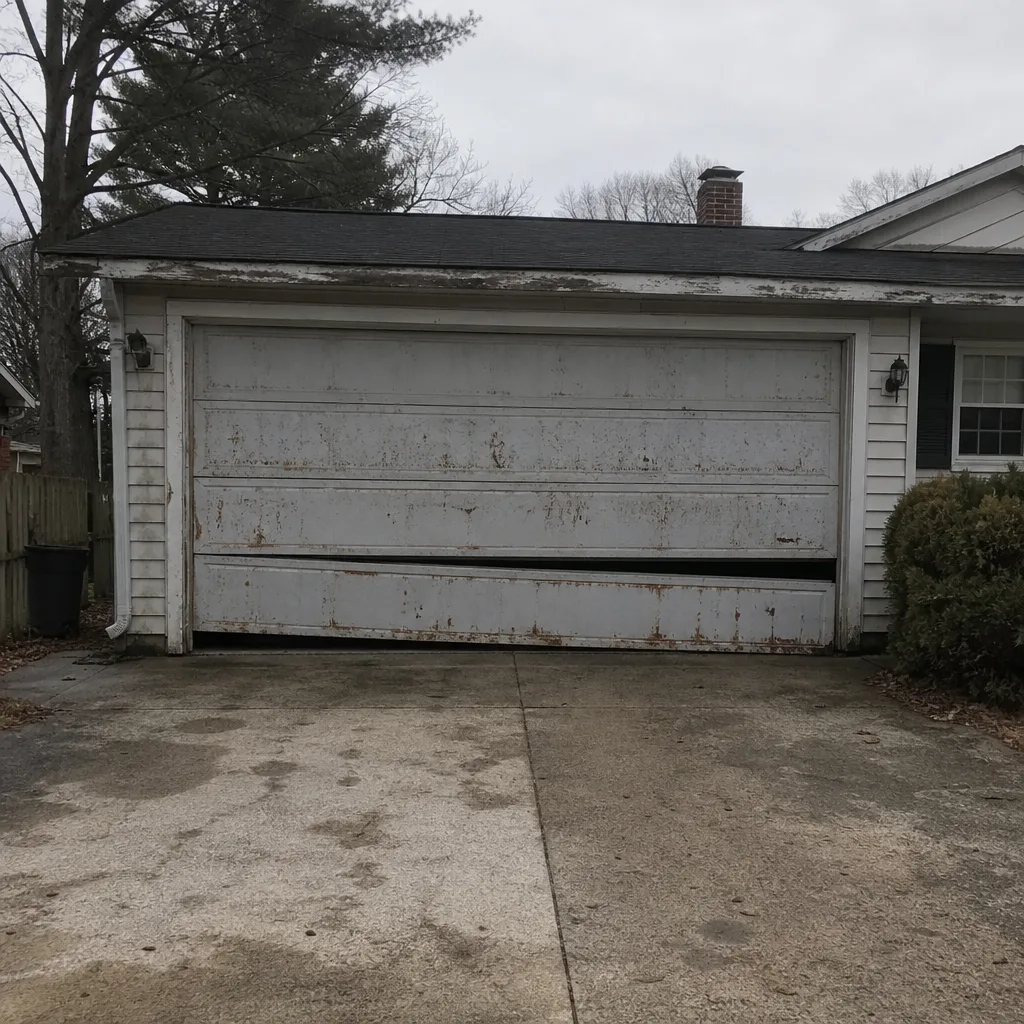 Before
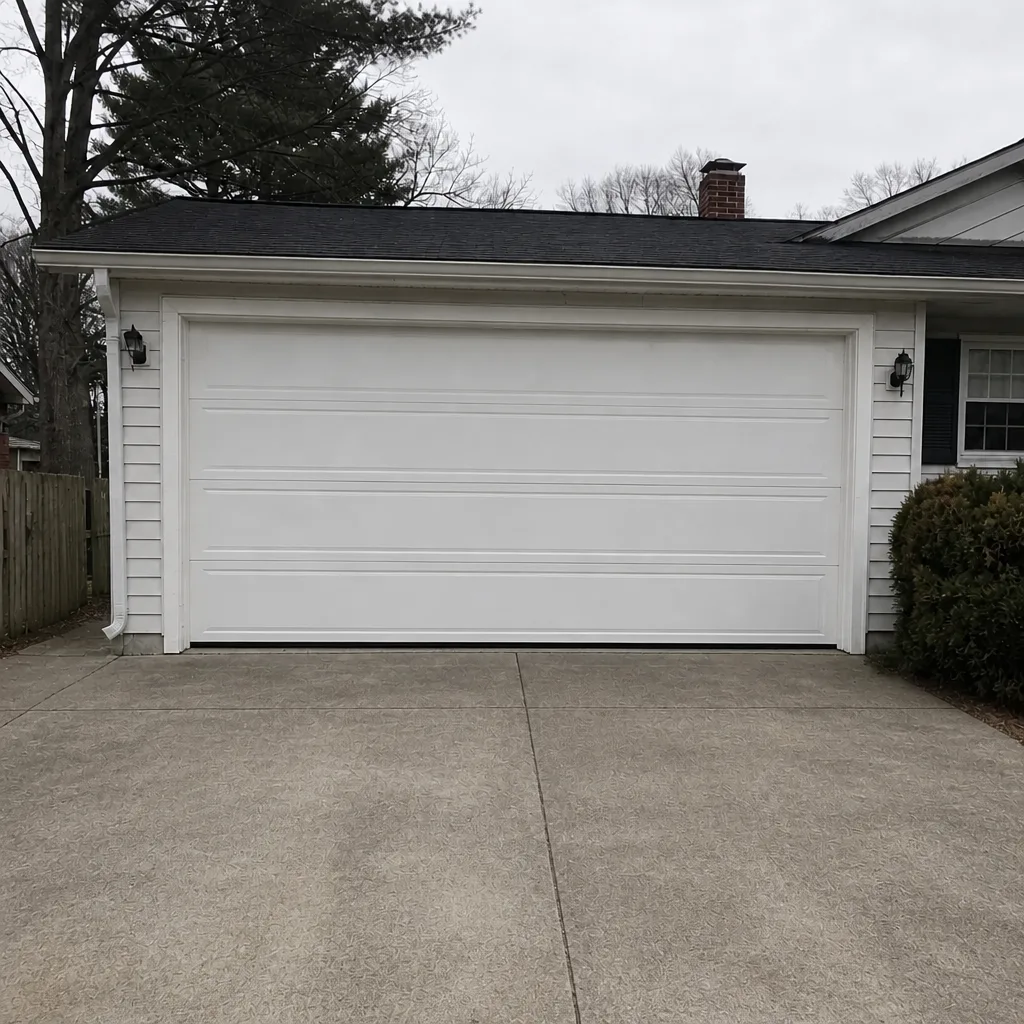 After
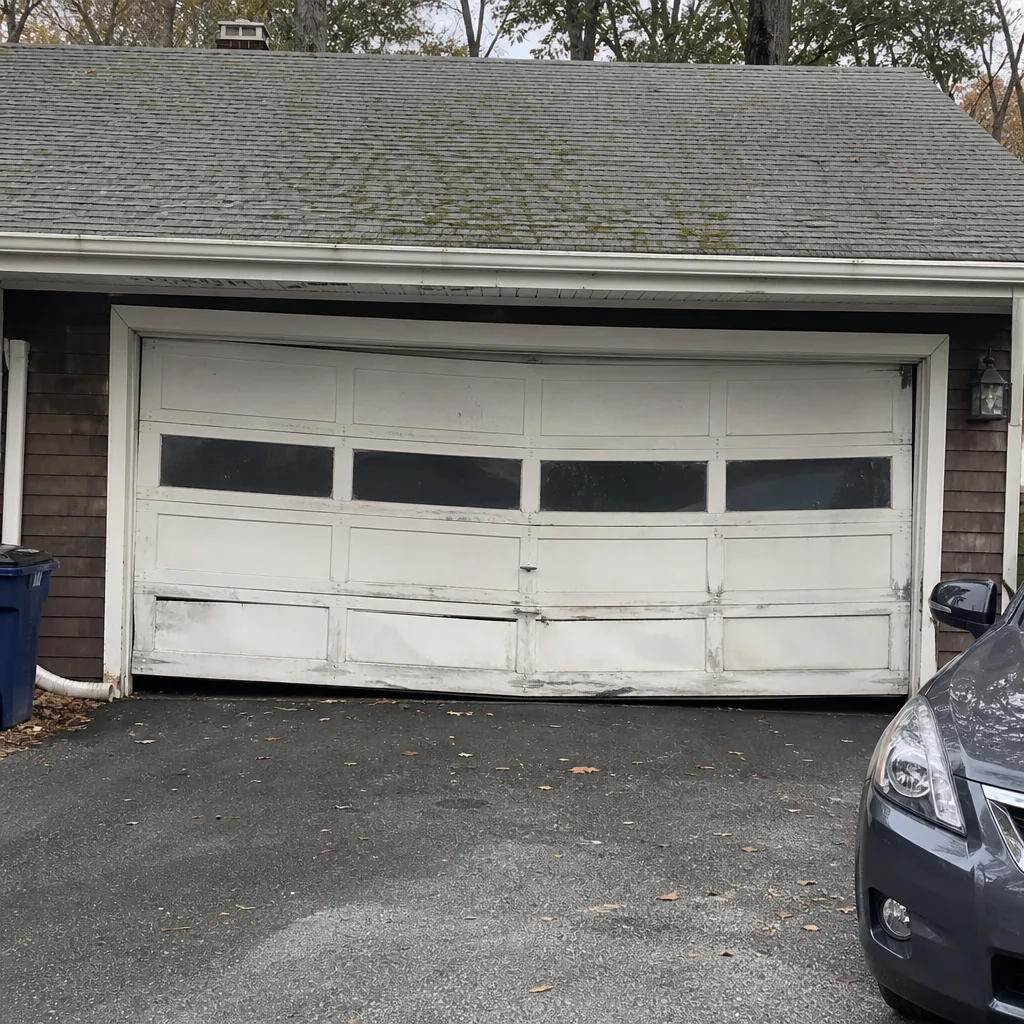 Before
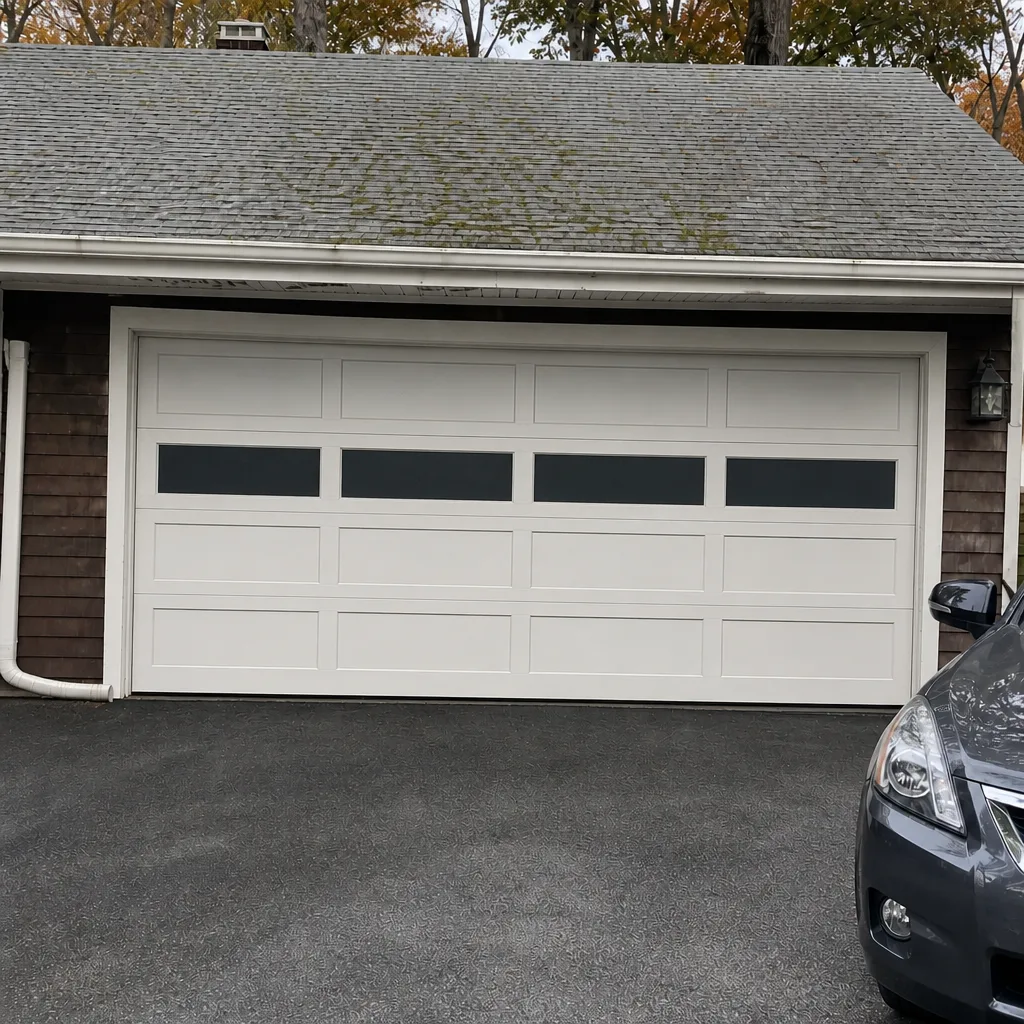 After
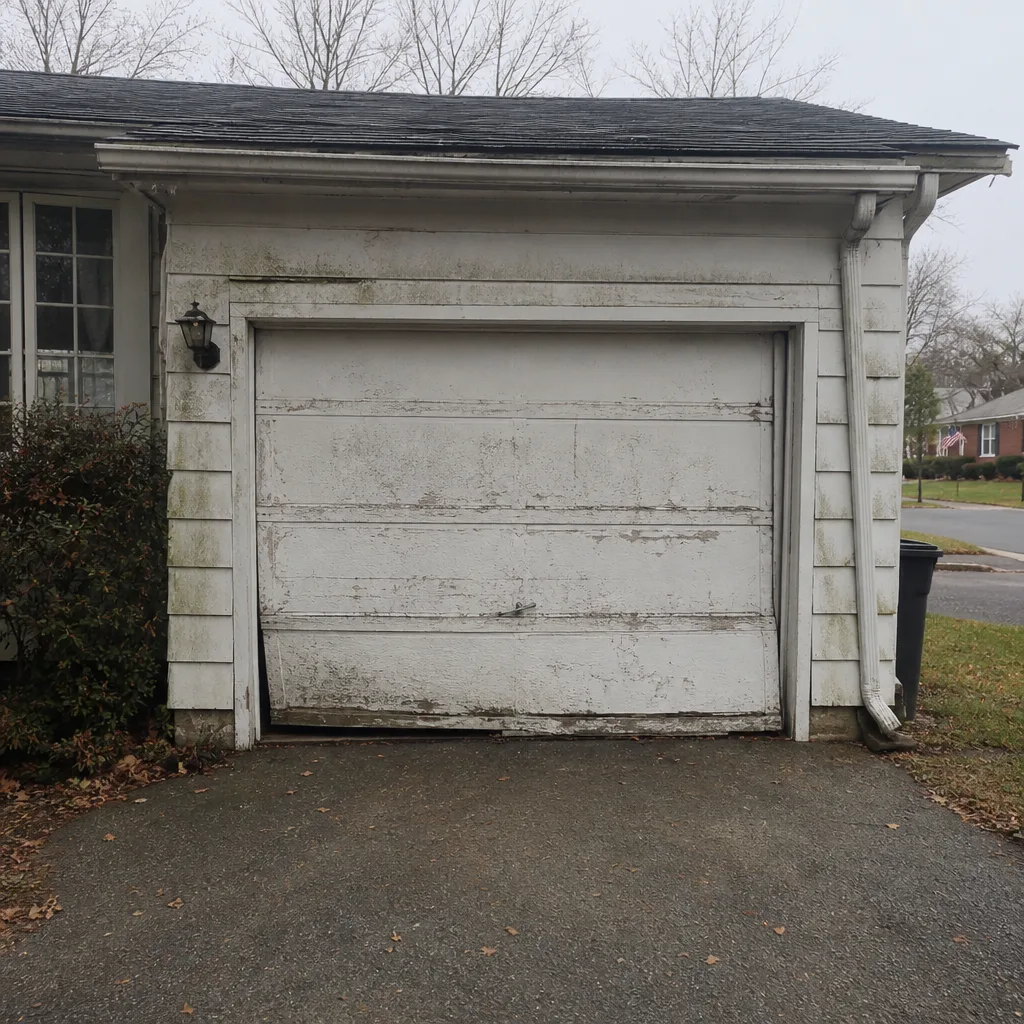 Before
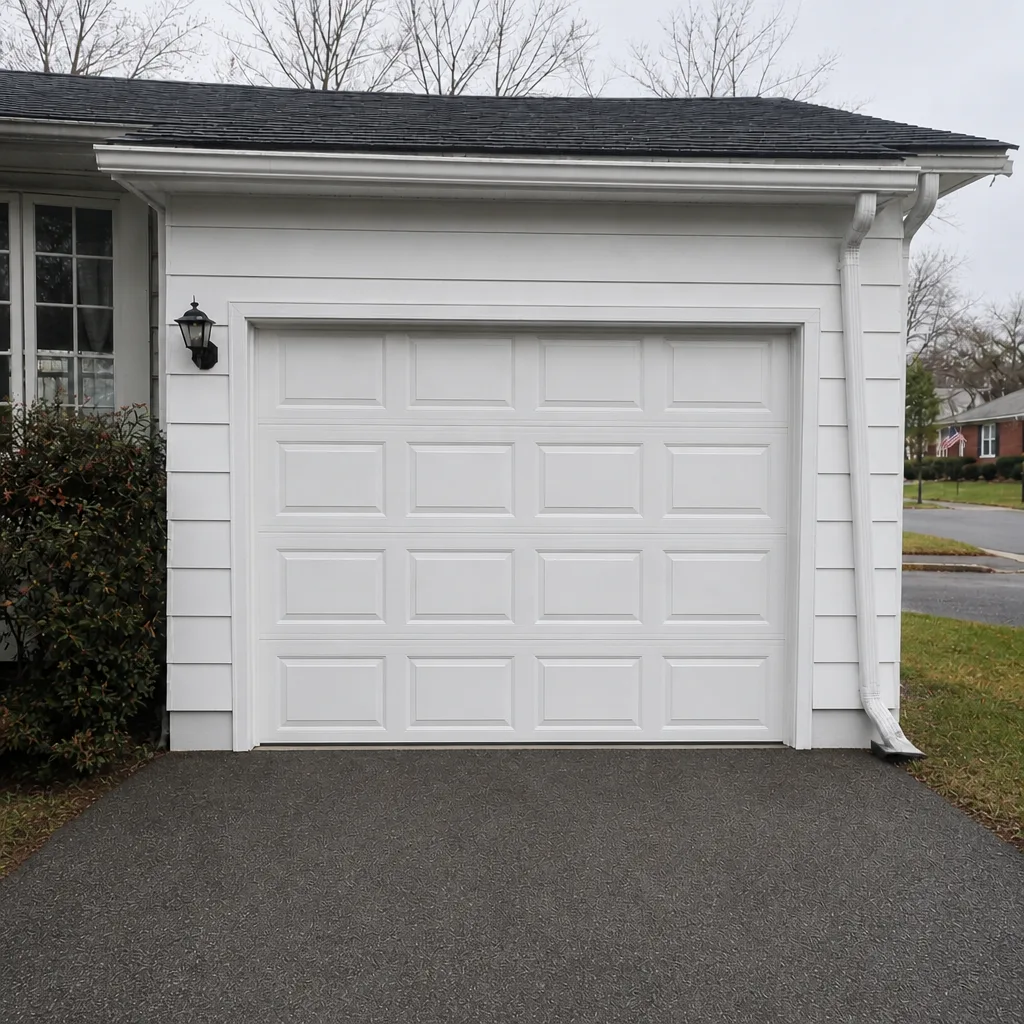 After
When to Call a Professional
Some fixes are safe to handle yourself: a remote that needs a battery, a safety sensor that’s been nudged out of line, a weather seal that’s due for replacement. Everything else on the structural and mechanical side belongs with a specialist. Call us when a spring has snapped, a cable is frayed or slack, the door won’t close all the way or won’t open at all, the door comes off its tracks, or you’re seeing corrosion that concerns you. Call us too if your car is trapped inside or your home is left unsecured by a door that won’t shut. Plymouth Garage Door Repair Co offers free estimates in Plymouth, and our technicians have up to 15 years of experience across every major brand. Call (866) 937-7208. We answer 24/7. Fast dispatch from 7am to 7pm, Sunday through Friday.
Frequently Asked Questions
Spring repair in Plymouth typically runs about $180 – $340 for a single spring, and a matched pair is usually replaced together at roughly twice that. The final price depends on the door and the job, and the written estimate sets it before any work starts. Call (866) 937-7208 for an exact quote. Estimates are free.
Yes, a door that won’t close is the kind of job we prioritize, and same-day service is often available. We answer 24/7, and our dispatch runs from 7am to 7pm, Sunday through Friday. Call (866) 937-7208 and we’ll book you into the nearest opening.
No. The price we quote is the price you pay, and we quote and agree it before any work starts. If the inspection turns up something extra that changes the job, we’ll tell you and re-quote before touching it. Call (866) 937-7208 for a free estimate.
The local professionals we connect you with are licensed and insured as their state requires, so the work is covered by a credentialed specialist. We screen for that before we send anyone. Call (866) 937-7208 to get started.
Sometimes. Homes built before 1990, and especially those in the historic districts, often have non-standard rough openings that don’t match today’s stock sizes. A free measure tells you whether a standard door fits or you need custom panels. Call (866) 937-7208 to schedule one.
Fiberglass resists corrosion well and suits damp coastal air, quality steel holds up with proper paint upkeep, and wood composite gives a traditional look with more maintenance. Pick for exposure first, then style. Call (866) 937-7208 and we’ll talk through what suits your home.
The Bottom Line
Garage doors in Plymouth work harder than the same doors inland. Salt air from the bay corrodes springs, cables and bottom brackets faster, frost heave racks older openings out of true, and pre-1990 housing stock often means a custom fit. Check the hardware seasonally, never touch a spring or cable yourself, and get a specialist to look at anything structural. For panel swaps and repairs, call today; for new doors, start with a free measure and a written price. If your door is failing, you’ve found the right guide. Now get it fixed properly. This is the work of a Plymouth Garage Door Repair Co team that does one trade and does it well. Call (866) 937-7208 for a free estimate. We answer 24/7. Fast dispatch from 7am to 7pm, Sunday through Friday.
Written by the team at Plymouth Garage Door Repair Co.